
Every home has its own smell. Some of it is pleasant: fresh laundry, a good meal, morning coffee. But underneath the everyday rhythms of a lived-in house, odors accumulate in ways that are easy to ignore. Pet smells, cooking odors, basement mustiness, and bathroom staleness gradually settle deep into surfaces, fabrics, and air.
The conventional answer has always been to add more fragrance on top. Spray something, plug something in, light a candle. But covering a smell and actually removing it are two very different things, and for anyone who’s tried to deal with a genuinely persistent odor, the difference becomes obvious fast.
Why Most Air Fresheners Don’t Actually Fix the Problem
Here’s the uncomfortable reality: many of the products designed to make your home smell better are contributing to the very problem they claim to solve. The EPA estimates that indoor air can be two to five times more polluted than outdoor air, and conventional air fresheners (aerosols, plug-ins, heavily fragranced sprays) are often part of that equation. Many emit volatile organic compounds including formaldehyde and phthalates, which are known contributors to indoor air pollution and linked to respiratory irritation and other health concerns.
That’s not a reason to panic, but it is a reason to look more carefully at what you’re reaching for when a room doesn’t smell right. The best approach to home odor removal isn’t adding more chemistry to the air. It’s getting to the source of what’s causing the smell in the first place.
Start With the Source, Not the Symptom

Before any product can do its job effectively, it helps to understand what’s actually causing the odor. Most persistent household smells fall into a few categories:
Surface-level fixes work on surface-level problems. For anything deeper, you need a formula that neutralizes odors at the source rather than masking them.
The Case for a Plant-Powered Approach to Odor Elimination
Consumer expectations around household products have shifted significantly over the past decade. The same mindset that drove ingredient transparency in skincare and pushback against artificial additives in food is now reaching air care. People are asking what’s actually in the products they use daily, and in an enclosed home environment where indoor air quality directly affects health, that’s a reasonable question.
See also

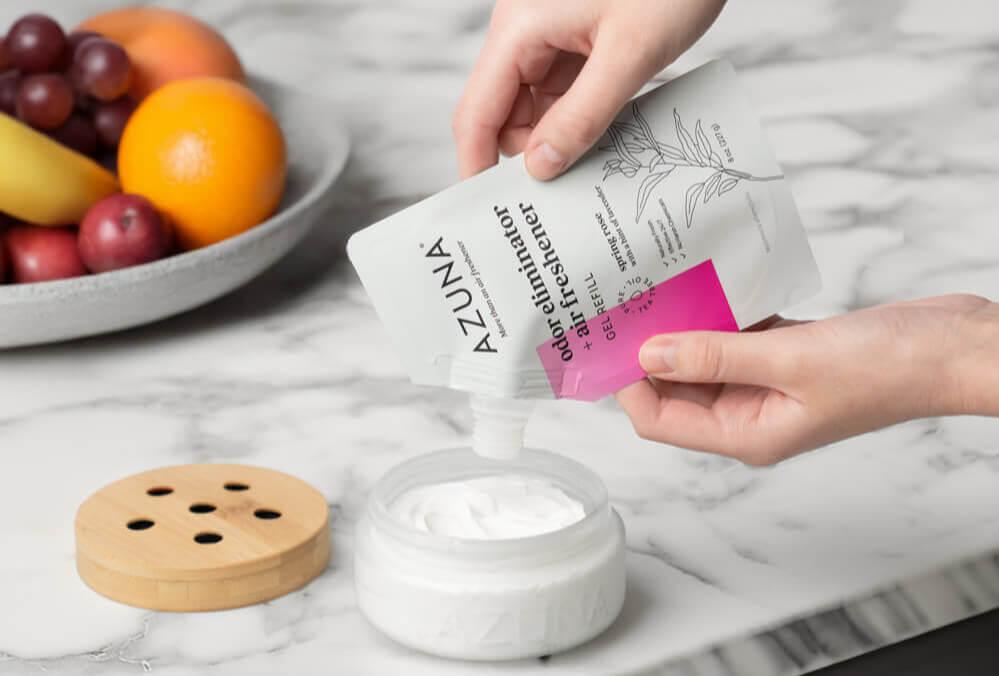
Pure Australian tea tree oil has emerged as one of the most effective natural active ingredients for genuine odor neutralization. Used for centuries for its odor-eliminating properties, tea tree oil works with your home’s airflow to target odors at the source rather than overwhelming the air with fragrance. That’s the philosophy behind Azuna’s air fresheners and odor eliminators, a product line built on a natural tea tree oil-based formula and oil sourced to Australian Tea Tree Industry Association standards. Every gel pod, spray, and cleaning wipe starts from the same belief: neutralize the odor, don’t cover it up.
A Room-by-Room Approach to Removing Home Odors
Different spaces in your home require different strategies. Here’s how to think about odor removal by area:
The Difference Between Freshening and Actually Fixing
Genuine home odor removal is less about what you add to the air and more about what you take away from it. The products worth using are the ones that eliminate odors at the source: that means choosing natural active ingredients over harsh chemicals, and opting for continuous coverage rather than reactive fixes.
A home that smells genuinely clean doesn’t smell like anything in particular. No ocean breeze, no lavender perfume, no chemical disinfectant. Just air that’s actually been dealt with rather than dressed up. That’s the standard worth aiming for, and with the right approach and the right products, it’s more achievable than most people expect.
Better Living may earn commissions through affiliate links and may occasionally feature sponsored or partner content. If you make a purchase through our links, we may receive a small commission at no cost to you.


















 Bengali (Bangladesh) ·
  English (United States) ·