
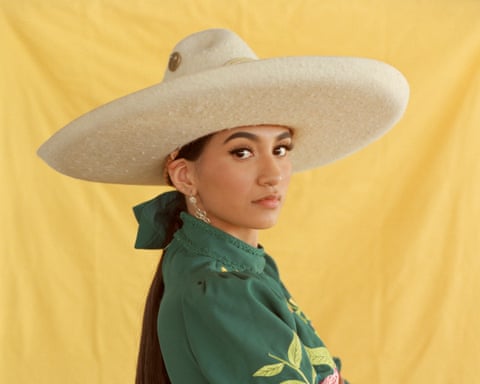
They wear Victorian dresses and make daring moves riding side-saddle. Photographer Constance Jaeggi on how she documented an all-female Mexican tradition
‘A feminist fairytale’ … Emily, Texas, 2023. Photograph: Constance JaeggiTue 25 Nov 2025 08.00 CETLast modified on Tue 25 Nov 2025 17.39 CET
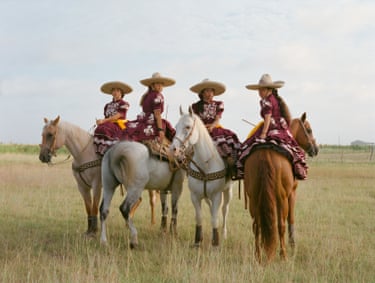
Marisol, Melanie, Nathaly and Stacy, Charra Azteca Manor, Texas
Constance Jaeggi travelled across the US to document the Mexican tradition escaramuza, photographing participants and recording their stories. Escaramuza is a unique sport: part ballet, part cavalry moves and something all its own – a dazzling display of skilled horsewomanship, art and power. Escaramuza by Constance Jaeggi with Poetry by Angelina Sáenz and ire’ne lara silva is available from Gost Books. All photographs and quotes by Constance Jaeggi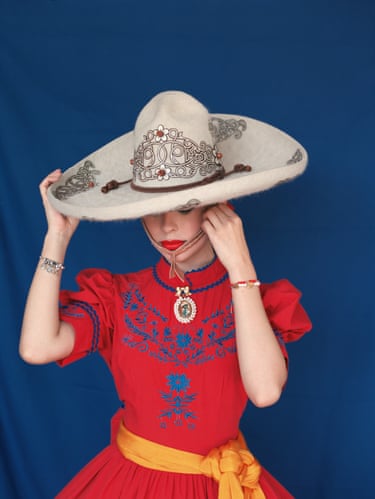
Mariana, Villa De Guadelupe Brownsville, Texas
Escaramuza evolved from charrería – the historically male-only national sport of Mexico. This equestrian pursuit is both an aesthetic performance and a display of athletic prowess with origins in cattle-ranching. The escaramuza discipline was invented for female participants, and the costumes and the synchronised patterns they perform were inspired by the Soldadera or Adelita, the women who fought in the Mexican Revolution between 1910-20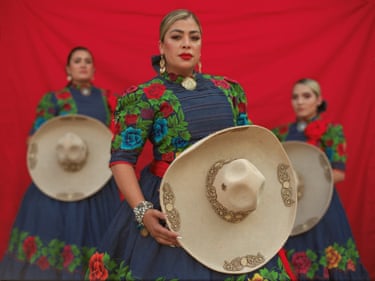
Brenda, Naiomy and Carolina, Flor de Aguileña Lakewood, Colorado
‘The women confront the camera and own the spaces they occupy. This is significant, as I’ve photographed the escaramuzas within the landscape that, historically, has been the privileged domain of the white male’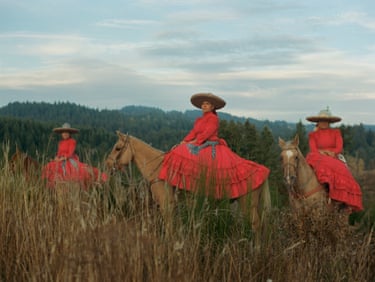
Emma, Stephanie and Lizeth, Selección de Oregon Mulino, Oregon
‘Escaramuza represents women’s reclamation of that space, of their right to coexist within it’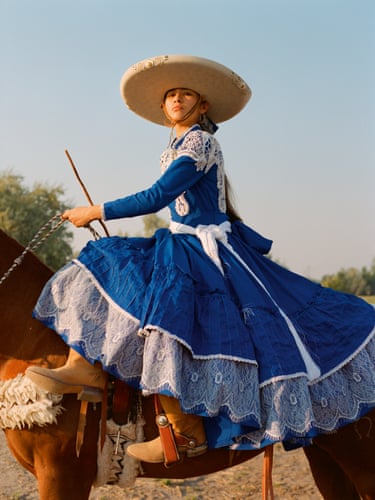
Fabiola, Sueño Dorado Nampa, Idaho
Each team consists of eight riders who perform patterns, criss-crossing each other at high speed, handicapped by riding side-saddle with only good control over one side of the horse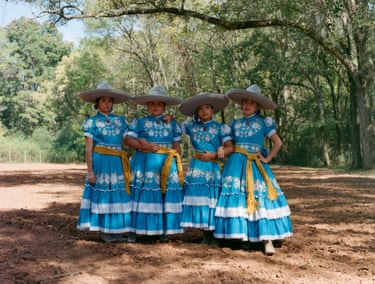
Xiomy, Camila, Sarah and Emily, Lirios de Tennessee Kingston, Georgia
Jaeggi, herself a competitive horse-rider, was initially drawn to the visuals of the sport. The Victorian-era dresses are colourful and intricate, with the performance being described as a ballet on horseback. However, she was soon captivated by the immigrant stories of the women she met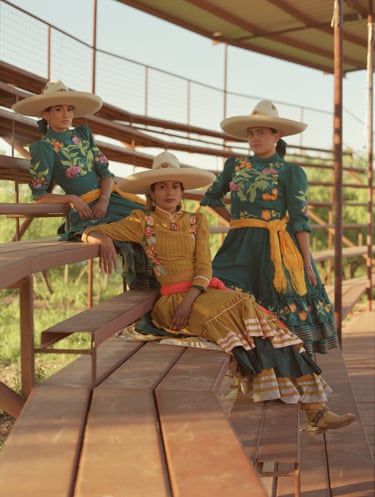
Emily, Maria Jose and Kimberly, Charras de Agua Santa Del Valle, Texas
‘These three are sisters. Emily told me what escaramuza means to her: “While it is the pretty dresses, the unique tradition, the sisterhood and community to many, it is also an escape. All my worries tend to lay down as soon as I enter the arena, especially when I gallop. The sport reminds me of my feminine power and Mexican history. It’s a source of creativity and comfort. It brings me joy”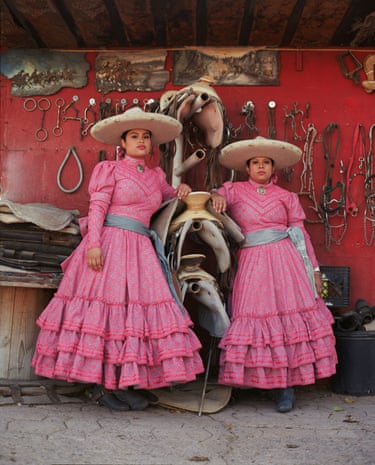
Analuisa and Jessica, Las Norteñas Canutillo, Texas
‘Las Norteñas, which Analuisa and Jessica are a part of, is one of the oldest escaramuza teams. It was started in Ciudad Juarez in Mexico in the 1950s and was later revived by some of its original members, so they could continue riding after they moved to the US. Today it is led by the mother-daughter duo Veronica Martinez and Bibiana Candelaria’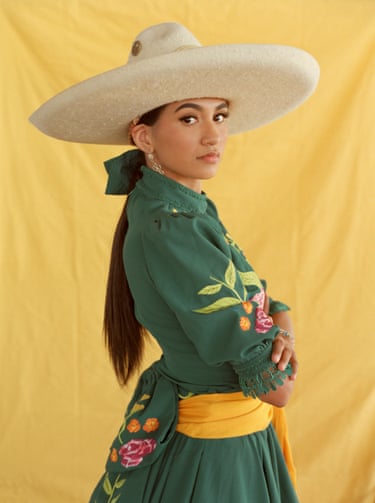
Emily, Charras de Agua Santa Del Valle, Texas
The competitions are easily the most captivating of a charreada. Eight minutes of spectacle, a feminist fairytale, a curious juxtaposition of aggressively genteel feminine visuals and the escaramuzas’ grit and skill as equestrians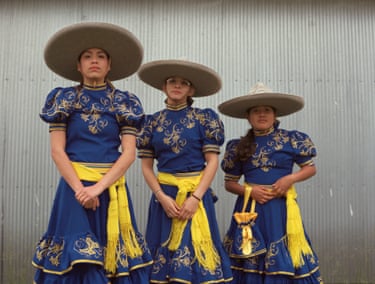
Giselle, Paloma and Eileen, Nueva Illusion Bennett, Colorado
Escaramuzas work year-round to perfect their skills. They care for and feed their horses, train with them, drive long hours hauling trailers to competitions and budget carefully to pay for their gear, tack and outfits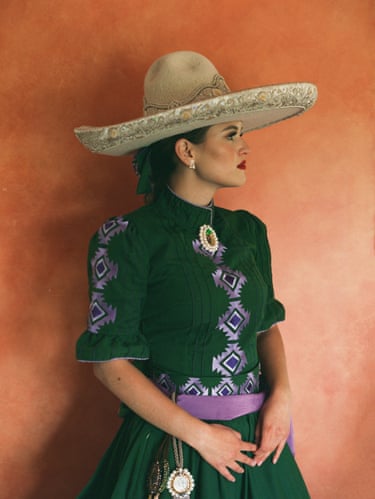
Paola, Erandi Buckley, Washington
‘I photographed Paola and her family while visiting them at their home in Buckley, Washington. Her family has been involved in charrería for three generations, long before they arrived in the US, and Paola has been an escaramuza her entire life’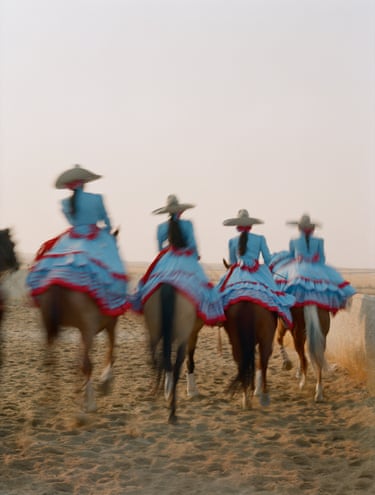
Jesenia, Amelia, Samantha and Areatana, Reinas Del Valle Nampa, Idaho
Jaeggi spent two years traversing the US to document this culture that bridges contemporary Mexican-American identity and the women freedom-fighters of the Mexican RevolutionExplore more on these topics















 Bengali (Bangladesh) ·
  English (United States) ·